
How to Start a Home Bakery Business in India: A Practical Guide
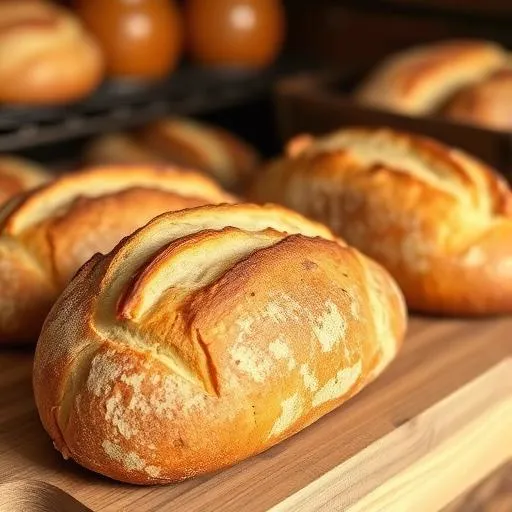
Every home bakery starts the same way: someone bakes for friends and family, gets told "you should sell this," and then spends weeks wondering how to actually turn that into a business. If that's you, you're standing at the start of a path a lot of people have already walked — and the timing is better than you might think.
Size of India's bakery market in 2026, growing at roughly 8.8% a year
IMARC Group, India Bakery Market Report 2026
India's bakery sector isn't a niche hobby economy anymore — it's a market worth an estimated ₹1.3 lakh crore (about $16 billion) in 2026, and industry analysts expect it to roughly double by 2034. Urban demand for fresh, artisanal, made-to-order bakes is a real and growing part of that story, and home bakers are riding it, not competing against it. A supermarket sells packaged bread. It doesn't sell a birthday cake made by someone who knows your child's name.
The nineteen-year-old who started with a hostel oven
In 2022, Samriddhi Elantholy was a 19-year-old student in Mumbai with no bakery, no staff, and no funding. She loved baking, started making desserts in whatever kitchen access she had, and began selling under the name La Joie. She didn't wait for the "right" moment — a proper kitchen, a business plan, a logo. She started with what she had and grew from there, one order at a time.
That's not an unusual story — it's the normal one. Sahithya Raj, an electronics engineer working at IBM in Hyderabad, started baking brownies and cupcakes from her apartment kitchen under the name The Sweetooth, selling to colleagues in her spare time. The orders kept coming, especially around Diwali. In December 2017, she left IBM, interned at a four-star hotel to sharpen her skills, and eventually built The Sweetooth into a business supplying desserts to cafés and cinema chains across the city. She didn't start with a plan to supply Barista and Carnival Cinemas — she started with brownies for coworkers.
Being diagnosed with cancer did not threaten the baker in Jasmine Lulla, who continued to work and expand her bakery brand, resting only during chemotherapy. Baking turned out to be the meditative place where her troubles melted away.
— From Jasmine Lulla's story, YourStory
Jasmine Lulla's home-kitchen experiment eventually grew into Cakes N' Craft, a 15-store chain selling over 500 cakes a day. Every one of these businesses — La Joie, The Sweetooth, Cakes N' Craft — started at exactly the stage you might be at right now: one kitchen, a handful of orders, and no idea yet how far it would go. None of them started big. They started consistent.
1. Start with what you already bake well
You don't need a huge menu on day one. Pick two or three items you're already confident making consistently — a signature cake, a batch of cookies, something festive. Consistency matters more than variety when you're starting out, because your first customers are judging whether they can trust you to deliver the same quality every time. Sahithya Raj didn't launch The Sweetooth with fifty items on the menu — she started with brownies, cupcakes, and cookies, and expanded once those were reliably good.
2. Get your FSSAI registration sorted early
In India, anyone selling food — even from home, even part-time — needs an FSSAI registration or licence under Section 31 of the Food Safety and Standards Act, 2006. The good news: as of April 2026, this got significantly easier. FSSAI raised the turnover threshold for Basic Registration from ₹12 lakh a year to ₹1.5 crore a year, and registrations issued after that date now carry perpetual validity (no more annual renewal scramble) for a flat fee of ₹100 a year. "Home Based Canteens/Dabba Wallas" is now an explicitly recognised category on the FoSCoS portal — this isn't a grey area anymore, it's a named, accounted-for business type.
3. Price for your actual costs, not just ingredients
The single most common mistake new home bakers make is pricing based only on ingredient cost. Your price needs to also cover your time, packaging, gas or electricity, wastage from failed batches, and a margin that makes the business worth doing. A simple starting formula: (ingredient cost + packaging) × 2.5 to 3, then adjust based on what similar sellers in your area charge. Industry guides for new Indian home bakeries generally point to the same pattern: most well-run home bakeries reach break-even by month two or three, and healthy profitability by month six — but only if the pricing was right from the very first order, not fixed later after months of underpricing.
4. Find your first ten customers where you already are
You don't need a marketing budget to get started — you need your own society. Neighbors, your building's WhatsApp group, friends who've already tasted your baking. The goal of your first ten orders isn't profit, it's proof: real people vouching for your food, which becomes the foundation everything else is built on. This is exactly the pattern behind almost every home-baker success story that gets written about later — a small, trusting circle first, word of mouth second, everything else after that.
Proof beats profit — every business you just read about started there.
5. Move beyond the WhatsApp group before it becomes a bottleneck
WhatsApp is a fine way to start, but it breaks down fast once you have more than a handful of regular customers — orders get buried, menus go stale, and there's no way for new neighbors to discover you unless someone forwards a message. This is exactly the gap a structured storefront closes: a place with your current menu, your prices, and a way for buyers in your community to find and order from you without you manually replying to every "is this available?" message. (We go deeper into exactly where WhatsApp starts working against you in our companion post, Why WhatsApp Groups Are Bad for Selling Homemade Food.)
That's the whole idea behind MyPadosi — a hyperlocal marketplace built specifically for home bakers, cooks, and makers who are ready to grow past scattered chats without needing an e-commerce degree to set it up.
Ready to start selling home bakers?
See how MyPadosi helps sellers in this category get discovered.